
Process Automation and
Digitization for Technical Systems
We digitize business processes to
address the unique challenges within your company.
Are you looking for a partner who can digitize established processes in a structured way — without replacing your existing systems or putting ongoing operations at risk?
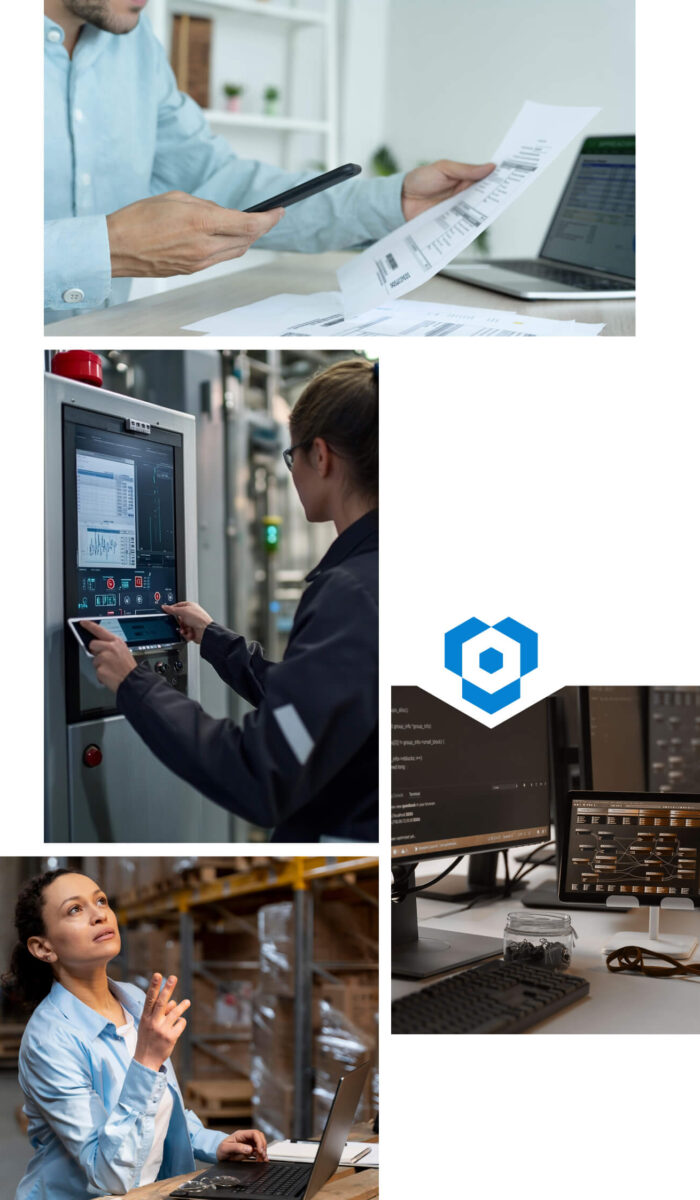
In many companies, processes have grown organically over the years: machine data is stored locally, inspection reports are still paper-based, Excel files serve as temporary solutions, and information is passed on manually.
This works, as long as full transparency, reliable analysis, or traceability are not required. It becomes challenging when data needs to be audit-ready, media breaks lead to errors, or manual transfers cost time and affect quality.
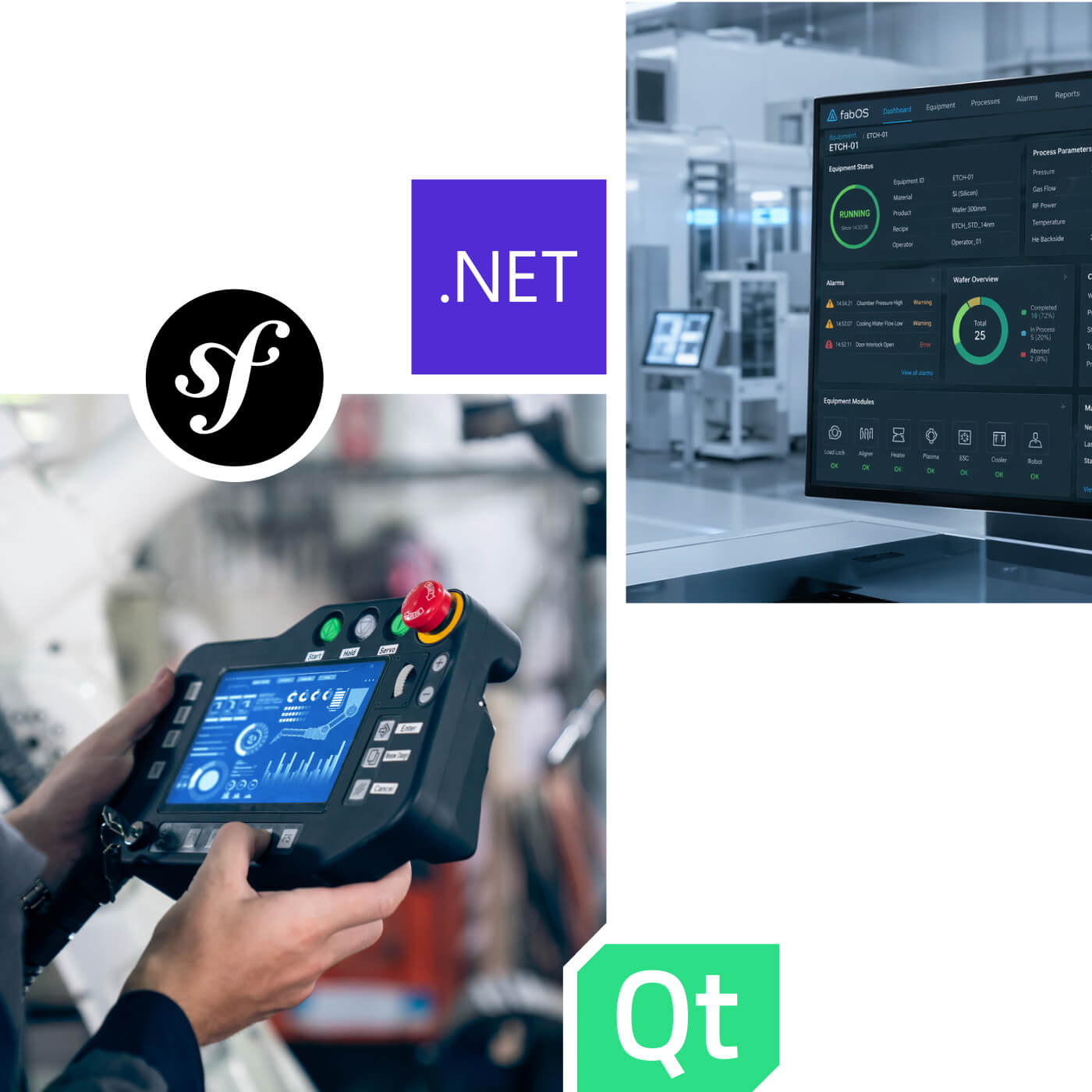
Qwasaa supports you in digitizing these processes step by step and structuring them in a technically sound way — within the context of your existing systems and workflows. Our know-how lies in established system landscapes, technical applications, and software solutions that need to be reliably integrated into existing processes — for example with PHP Symfony, .NET, or Qt.
We develop solutions that make data available exactly where it is needed: traceable, consistent, and without unnecessary complexity.
The result: fewer media breaks, fewer errors, and processes that work reliably in daily operations and can be evaluated with confidence.
Digital processes in established system landscapes
In many technical environments, data is generated in different places:
- machines and sensors
- local databases
- Excel files
- paper-based records
- manual handovers between teams
These data sources are often not fully connected.
Typical situations include:
- information has to be transferred multiple times
- data is stored in isolated systems
- evaluations are carried out manually
- relationships between data points exist only implicitly
For us, software engineering therefore does not mean replacing existing systems too quickly. It means understanding current structures, assessing technical dependencies properly, and developing processes further so that information can flow reliably.
Qwasaa connects existing systems, data sources, and applications in a way that makes your processes traceable, measurable, and maintainable in the long term. We modernize where it makes sense. We integrate where systems should continue to be used. And we develop new software where manual workflows or temporary solutions slow down your teams.
Common challenges in process digitization
Many digitization projects do not fail because of a lack of ideas. They fail because of the reality of existing systems.
We often encounter situations like these:
Information is often captured multiple times: on paper, in Excel files, or in individual business applications. This creates duplicate work, unclear data statuses, and processes that are difficult to trace in daily operations.
When data is transferred manually, typing errors, missing information, or outdated data can quickly occur. This costs time, makes reliable evaluations more difficult, and increases the effort required for checking and correction.
Important information is often spread across machines, files, local databases, or business applications. As a result, teams lack a unified view of processes, statuses, and dependencies.
Many reports are still created through Excel, individual queries, or subsequent data consolidation. This makes results difficult to reproduce and regularly ties up valuable resources.
Process knowledge is often held by individual people or stored in free-text fields, inspection notes, or older documents. This makes it difficult to manage workflows consistently or implement new requirements cleanly.
New requirements often meet established workflows, existing interfaces, and interim solutions that are difficult to maintain. What makes sense from a business perspective can quickly become technically complex.
For business departments, this often means too much manual work, too little transparency,
and a high level of effort whenever data needs to be checked, documented, or processed further.
For IT and development teams, it means established dependencies, hard-to-maintain interim solutions,
and requirements that can only be integrated into existing systems with considerable effort.
This is exactly where Qwasaa comes in.

We support you in the digital transformation
Analysis of existing processes and data sources
We analyze your existing workflows, data sources, and technical dependencies. This includes machine, sensor, file, and paper-based processes, as well as existing applications, interfaces, and manual handovers. This creates a clear picture of where data is generated, where it is processed, and where media breaks, sources of error, or unnecessary manual effort occur.
Structuring and decoupling data flows
Qwasaa implements data flows in a way that makes information consistent, traceable, and usable. Data is not simply collected. It is structured, validated, and organized so that it can be reliably used for analysis, documentation, further processing, or future extensions.
Step-by-step digitization of manual workflows
We digitize manual processes wherever they create unnecessary effort or put quality at risk in daily operations. This includes inspection reports, documentation, checklists, approvals, or handovers between teams. Existing ways of working are not made unnecessarily complex, but are transferred into digital applications in a practical and meaningful way.
Integration of existing systems
Qwasaa connects machines, applications, and data sources — without disrupting ongoing operations. Our know-how lies in technical system landscapes where existing software, device-related applications, backend systems, and manual processes need to be brought together.
Typical applications for process digitization software
We deploy software for process digitization and automation
wherever information needs to be reliably captured, consolidated, or analyzed.
Typical use cases include:
- digital capture of inspection reports
- consolidation of machine data and manually recorded data
- automated creation of reports instead of manual Excel processes
- structured storage and historization of sensor data
- consolidation of data from multiple systems
- digital mapping of approvals and checklists
The issue is not to automate as much as possible. What matters is streamlining the right process steps: those where errors occur, time is wasted, or traceability is lacking.
Technologies and environments
We work in environments where these kinds of solutions typically emerge:
- PHP Symfony for web, backend, and integration solutions
- C# / .NET for applications, services, and system integration
- Qt for device-related applications and visualization
- interfaces to machines, sensors, and existing systems
- established IT and system landscapes
For us, software engineering means making technical decisions that fit the existing environment.
We do not develop solutions that ignore your reality. We take existing systems, data structures, dependencies, and operational requirements into account from the start.
Practical use case:
Making technical data usable
Digital availability of inspection and device data
Many companies initially record relevant information manually, for example in inspection reports, Excel lists, or service reports. Only in a later step is this data transferred into other centralized systems.
This costs time, creates sources of error, and makes later evaluations more difficult. Qwasaa supports companies in digitizing such processes by extending existing workflows with applications that capture information directly in a structured way and make it available for further use.
Data from different sources is brought together and provided in a way that supports analysis, documentation, and further processing.
Typical aspects include:
- digital capture instead of later manual transfer
- central availability of information
- integration into existing systems and processes
- reproducible and traceable evaluations
This creates processes that do not just look digital, but genuinely relieve teams in their daily work.
Integration of unstructured information
In many processes we have supported over the years, key information is not available in a structured format. Instead, it appears in free-text fields, inspection notes, or scanned documents.
Here, Qwasaa implements modern AI-supported methods where they provide real value, for example for:
- text recognition and structuring of paper-based documents
- classification of technical reports
- extraction of relevant information
These methods are integrated in a targeted and controlled way — combined with technical validation and clear responsibilities.
Automation does not mean moving decisions into a black box. For us, automation means supporting recurring work steps in a traceable way and preparing information so that people and systems can work with it more effectively.
Let’s discuss your system and your current situation.
What makes Qwasaa the right choice??
When processes have grown over many years, standard software is often not enough. At the same time, a complete rebuild is often neither economically nor technically reasonable. Qwasaa works exactly in this area of tension. We develop, modernize, and integrate software solutions for technical systems in which existing applications, data sources, and workflows need to work together.
This gives you clear advantages:
- you continue to use existing systems where they still make sense
- you reduce manual transfers and sources of error
- you make data traceable and available for analysis
- you improve the quality of your documentation
- you create a technical foundation for further automation
- you digitize step by step instead of taking the risk of a full replacement project
Our goal is not to make processes artificially complex. Our goal is to develop software that works in operation, remains understandable, and noticeably relieves your teams.
Why is process digitization important for your business?
With Qwasaa, digital processes are created that fit your existing system landscape and work reliably in daily operations.
You benefit from:
- fewer media breaks
- fewer transfer errors
- better traceability, for example for audits
- faster analysis and reporting
- structured and transparent processes
- information that is reliably available
Process optimization creates greater transparency: tasks can be captured more accurately, data can be digitized, and relevant information can be made available in a structured and accessible way. Digital access to information also enables faster and more reliable analysis and reporting. This saves time and costs while improving the user experience for everyone involved in the business process. This turns process digitization from an isolated IT project into a sustainable foundation for better workflows, clearer data, and targeted automation.
Request process digitization for your technical systems
Do you want to reduce manual workflows, make data more accessible, or connect existing systems in a meaningful way?
Talk to Qwasaa about your process digitization.
Creating clarity together –
the next meaningful step for your software
Your contact persons

Frank Rub
Chief Executive Officer



Sebastian Kratz
Head of Innovation
Let’s get started
We look forward to your inquiry and will get back to you within one business day.
By clicking the submit button, you confirm that you agree to our privacy policy.
Where to find us
Our home is on the 13th floor of the Jentower, in the heart of the beautiful city of Jena on the Saale River.
Do drop by – we look forward to seeing you.
show on map